
The UPF Debate
Why Food Brands Should Pay Attention —Regardless of Who's Right
By now, you've probably heard the term "ultra-processed foods" (UPFs) more times than you can count. The phrase has become a staple of media headlines, public health discussions, and policy proposals. It has also become a lightning rod for debate.
A recent article in The Atlantic challenged whether ultra-processed foods are truly a distinct scientific category or simply a modern rebranding of what previous generations called "junk food." The author raises an important point: despite growing concern over UPFs, there is still no universally accepted definition.
In fact, as one FDA official recently acknowledged, "A definition for ultra-processed foods is really hard."
For food companies, that uncertainty creates a unique challenge.
What Is a UPF, Exactly?
Most discussions of ultra-processed foods trace back to the NOVA classification system, developed by Brazilian epidemiologist Carlos Monteiro and colleagues. NOVA categorizes foods into four groups based on the extent and purpose of processing, with Group 4 representing ultra-processed foods.
The framework has become enormously influential in public health circles and serves as the foundation for much of today's UPF research and policy discussion.
At the same time, critics argue that NOVA often groups together foods with very different nutritional profiles, making it difficult to determine whether processing itself is the concern or whether the issue remains the more familiar combination of sugar, sodium, refined carbohydrates, calories, and dietary patterns.
The result is an active scientific debate—one that is unlikely to be resolved anytime soon.
Why the Debate Matters
As food scientists and industry consultants, we're less interested in taking sides than understanding the practical implications.
Whether UPFs ultimately become a permanent regulatory framework or evolve into something more refined, the conversation is already influencing decision-making.
We're seeing growing attention in:
School meal programs
State-level food policy initiatives
Front-of-package labeling discussions
Public health guidance
Consumer purchasing decisions
In other words, the definition may still be developing, but the market signals are already here.
What the Research Says
The most comprehensive examination of the issue to date may be the recent Lancet series on ultra-processed foods, which argues that UPFs are closely associated with obesity, type 2 diabetes, and other chronic diseases.
Critics, however, point out that much of the evidence remains observational. While associations exist, establishing causation is considerably more difficult. Researchers continue to debate whether industrial processing itself drives health outcomes or whether UPFs simply serve as a proxy for diets high in sugar, sodium, saturated fat, and refined carbohydrates.
Those are important scientific questions—and they deserve rigorous investigation.
The Business Reality
For food brands, the more immediate question is not whether the science is settled.
It's whether customers, regulators, retailers, and institutional buyers are paying attention.
The answer is yes. School systems are exploring restrictions. Policymakers are discussing definitions. Consumers increasingly recognize the term. Media coverage continues to expand.
That means product developers should begin evaluating how their portfolios align with emerging expectations around transparency, formulation, ingredient systems, and consumer perception.
Our Perspective
Food processing itself is not inherently good or bad.
Processing improves food safety, extends shelf life, enhances accessibility, supports affordability, and helps deliver consistent quality at scale. Many processed foods play an important role in modern food systems.
At the same time, consumer expectations are evolving. Brands that understand how their products may be viewed through the UPF lens will be better positioned to respond—regardless of how regulators ultimately define the term.
The debate may continue for years. The need to pay attention is already here.
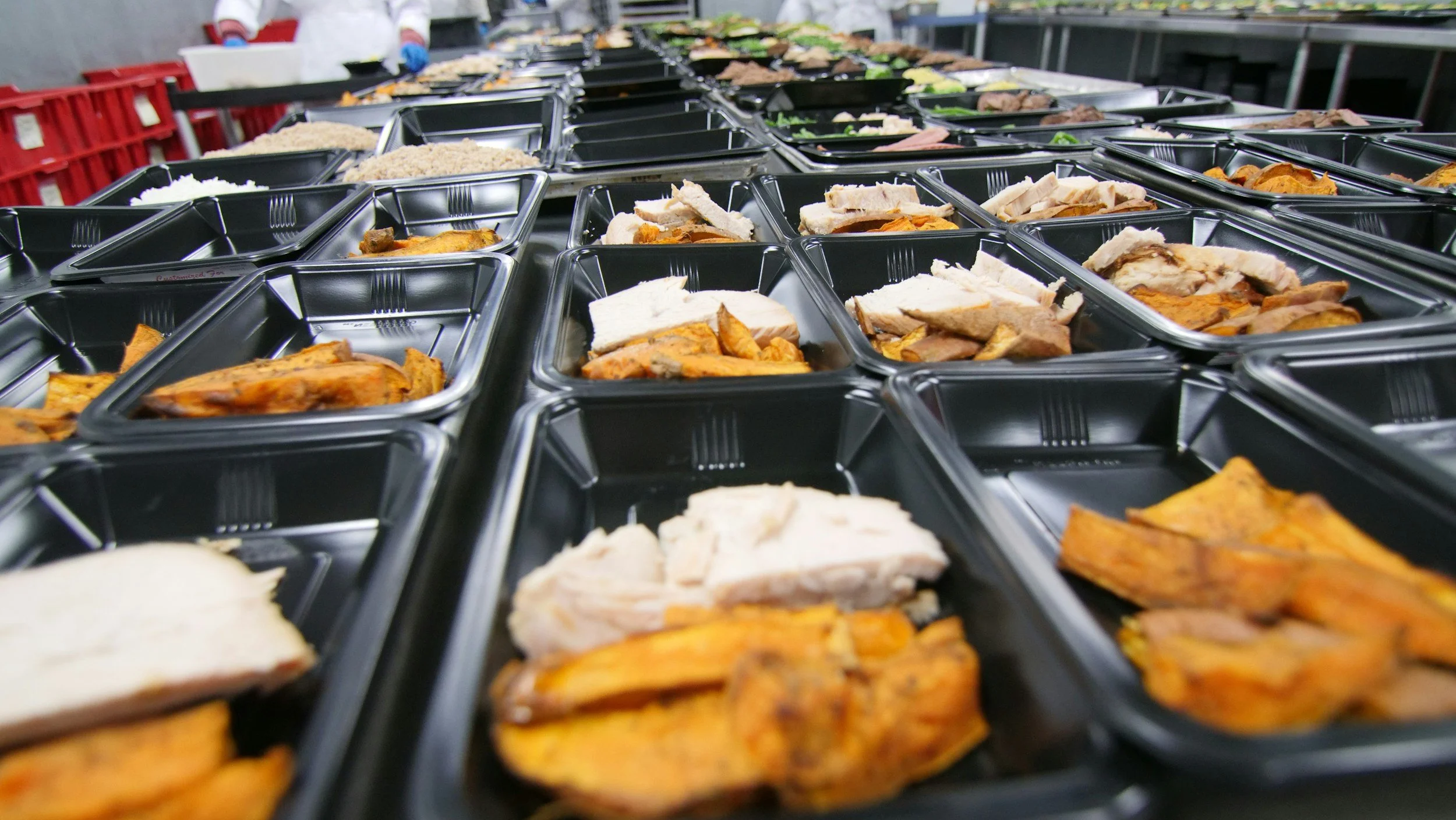
School Lunches: The First Real Test of UPF Policy
Federal nutrition policy is increasingly positioning school meal programs as a proving ground for broader food system changes. Recent guidance emphasizes whole, nutrient-dense foods and reduced reliance on highly processed products. At the same time, state-level efforts are exploring how additives, formulation, and processing should be addressed in school environments.
This aligns with broader “Make America Healthy Again” (MAHA) messaging, which connects dietary patterns, chronic disease, and food system reform.
For industry, the takeaway is practical: School food is often where policy becomes operational first. Changes in this space can influence procurement standards, product eligibility, and eventually broader retail expectations. Brands that understand and adapt to school-based requirements early will be better positioned as policy expands.

UPFs and the Future of Food Regulation: Why This Conversation Is Different
Ultra-processed foods are not a new concept—but the way they are being incorporated into U.S. policy is new.
Historically, food regulation has focused on nutrients, safety, and labeling accuracy. Today, regulators are beginning to ask a different question: not just what is in a product, but how it was made.
That shift matters.
It introduces a level of subjectivity that the industry has not had to navigate at scale. Terms like “ultra-processed” are not yet formally defined in U.S. regulation, but they are already influencing dietary guidance, school food discussions, and global labeling systems.
This creates a unique challenge for brands and co-packers.
Unlike traditional compliance issues—where rules are clearly written—UPFs represent a moving framework. Definitions are still forming. Policy is still taking shape. But expectations are already changing.
School meal programs are a clear example. Public feeding systems are being positioned as early adopters of nutrition policy, with increasing emphasis on whole foods and reduced reliance on highly engineered formulations. What happens there often expands into broader procurement standards.
At the same time, front-of-package labeling discussions are gaining traction. Globally, simplified labeling systems have already demonstrated the ability to shift consumer behavior and drive reformulation.
Taken together, these signals point to a likely outcome: UPFs will not be regulated through a single rule. They will be addressed through a combination of definitions, labeling, procurement standards, and market pressure.
For our industry, this is not a moment to wait for certainty — it is a moment to build flexibility.
That means understanding where your products may be exposed, identifying opportunities for simplification, and preparing for a future where processing becomes part of the regulatory conversation.

What the Redefinition of Drinking Means for Innovation Pipelines
What the Redefinition of Drinking Means for Innovation Pipelines
As drinking becomes more intentional, innovation pipelines are under new pressure—not to move faster, but to move smarter.
The rise of non-alcoholic beer, alcohol-removed wine, mocktails, functional beverages, and alternative formats has not created a single new category. It has created a landscape of adjacencies, each serving different moments, motivations, and risk profiles.
That complexity is reshaping how innovation decisions are made.
From Volume Bets to Optionality
Historically, beverage innovation has often aimed at driving frequency: new flavors, line extensions, or seasonal spins designed to reinforce habitual consumption.
Today’s pipelines look different. They increasingly prioritize:
Occasion-based use cases
Lower-frequency, higher-intent moments
Products that coexist rather than compete internally
Innovation is less about replacing what exists and more about layering options.
Lowering the Cost of Consumer Adoption
One of the clearest lessons from the growth of non-alcoholic beer and alcohol-removed wine is the value of low-friction innovation.
Products that:
Preserve familiar rituals
Fit existing consumption habits
Require minimal education
tend to scale faster than those that demand behavioral change.
This insight is shaping early-stage concept screening and portfolio adjacency planning.
Where Innovation Pipelines Are Stretching
The redefinition of drinking has expanded the questions innovation teams must answer earlier in development:
Is this additive or substitutive?
Does it create a new moment—or compete with an existing one?
Is the value experiential, functional, or ritual-based?
How sensitive is this concept to regulatory, channel, or generational shifts?
These questions increasingly influence which ideas move forward, not just how they are executed.
Managing Risk in a More Fragmented Landscape
Fragmentation does not automatically mean instability—but it does demand discipline.
Successful pipelines are:
Modular rather than monolithic
Designed for adjacency, not overreach
Grounded in formulation and claims clarity
Aligned with channel realities early in development
The goal is not to chase every trend, but to build resilience into innovation planning.
Looking Ahead
Dry January may spark curiosity, but the behaviors it reveals are shaping innovation year-round.
As alcohol becomes one option among many, innovation pipelines that reflect choice, flexibility, and intent will be better positioned to respond—not react—to what comes next.
The future of beverage innovation is not about betting on a single outcome. It’s about designing for multiple paths forward.